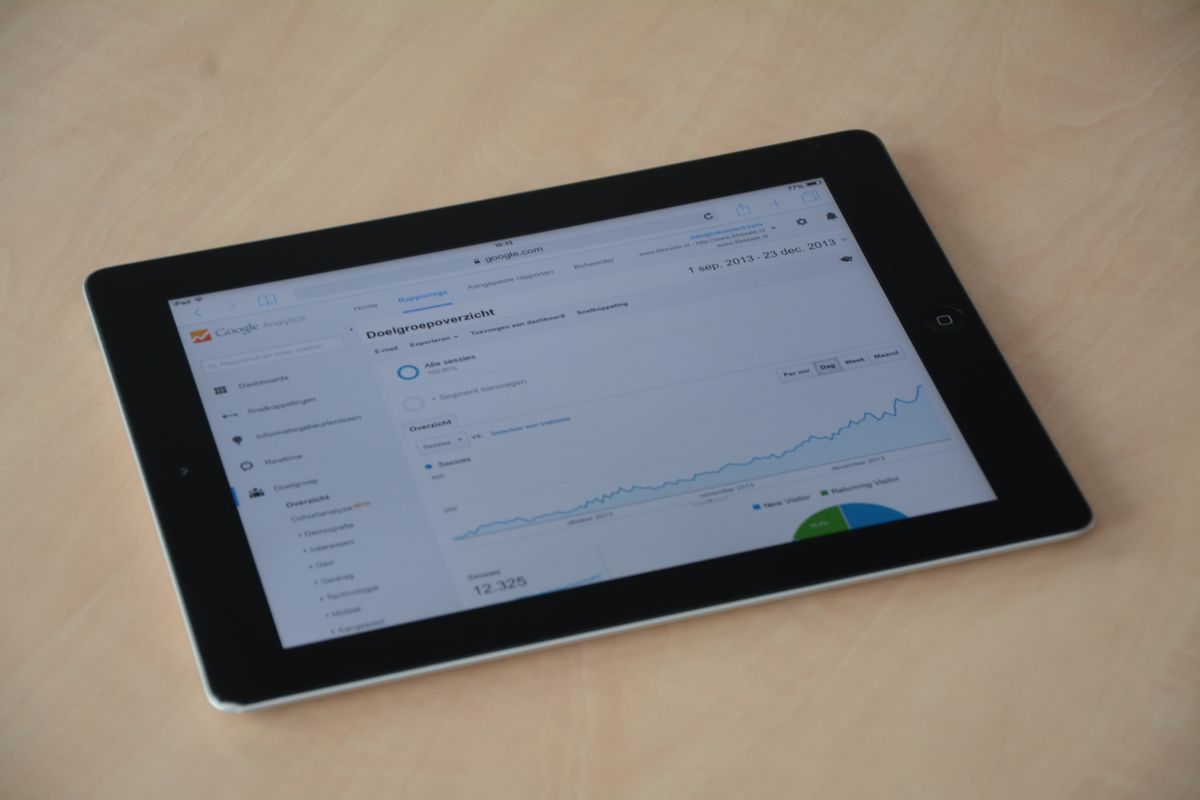

The fastest SEO wins are usually already sitting in your Google Search Console data. Open the Performance report, filter for queries ranking positions 5 through 15 with real impressions, and you'll find pages Google already trusts enough to show, just not enough to click. Fix the title, the snippet, or the content gap on those pages before you write anything new.
I say this as someone who spent years defaulting to "publish more content" as the answer to a traffic plateau. It's lazy advice, and I gave it too. Then I started actually reading Search Console instead of glancing at it, and I found pages ranking position 8 for buying-intent queries with a 1% CTR, sitting untouched for over a year. Fixing five of those pages moved more pipeline than the next ten blog posts combined.
Why Search Console Beats Guesswork
Search Console is not pretty, but it is honest. Third-party keyword difficulty scores are estimates built on someone else's model of the SERP. Search Console shows you what Google actually did with your actual pages: which queries served them, what position they landed, how many people saw them, and how many clicked. That's not a proxy metric, that's your site's reality.
Is Google Search Console good for SEO? Yes, and it's the most underused tool most site owners already have installed. It won't do keyword research for competitors, it won't track backlinks, but for understanding what your own site is already earning visibility for, nothing beats it because nothing else has the same first-party click and impression data.
The community sentiment on this matches what I've seen firsthand: people rediscovering GSC for keyword research keep saying some version of "this is more useful than I expected." It is. Most people just never dig past the summary graph.
The Striking Distance Method
Striking distance keywords are queries where your page ranks positions 5 to 15. Not page one, not buried on page four. This is the highest-ROI zone in SEO for one simple reason: the page is already indexed, Google already considers it relevant, and the ranking risk is mostly gone. You're not trying to convince Google your page deserves to exist for that query. You're trying to convince Google (and the searcher) it deserves to rank higher.
Here's the process I actually run:
- Open Search Console > Performance > Search Results.
- Add a filter for average position between 5 and 15.
- Sort by impressions, descending. High impressions plus poor position is your candidate list.
- Cross-check CTR against position. If your CTR is below what's typical for that position, your snippet is underperforming even relative to a mediocre rank.
- Open each page and ask: does this align with commercial or informational intent? A page ranking position 7 for "best X for small business" is worth more than one ranking position 4 for a vague informational term with no path to a conversion.
- Check what's actually on the page versus what the query implies. Mismatched intent is the single most common reason a page stalls in striking distance.
This is striking distance keywords in Search Console, and it's the closest thing I have to a repeatable playbook. It's also exactly the kind of ranked-action-list thinking I built SEOcompass around, because doing this manually across hundreds of query-page pairs is where most people give up.
Reading the CTR Gap Correctly
Low CTR at a good position is a snippet and intent problem, not a rankings problem. Before you touch content, look at what's actually promising to the searcher versus what's being delivered.
Common causes I run into constantly:
- Weak or generic title tags that don't state the specific benefit or answer.
- Meta descriptions that got auto-generated or never written at all.
- Misaligned intent, where the page educates but the query wants a comparison or a "best of" answer.
- Missing structure, no clear first-screen answer, no table, no list, nothing scannable.
- No proof, no specifics, numbers, or examples that make the result feel credible in the SERP.
I've made the mistake of trusting an "optimization score" from a tool over actual judgment here. Adding keywords to a title never fixes a quality-signal problem. What fixes it is rewriting the title and the opening paragraph so they actually answer the query, then giving Google (and increasingly, AI answer engines) something clean enough to quote.
Quick Wins Beyond Striking Distance
Striking distance is the biggest lever, but Search Console surfaces a few other quick wins worth checking weekly:
- Pages ranking for the wrong query. A blog post accidentally outranking your actual product page for a commercial term is a signal to add internal links pointing intent to the right destination.
- Cannibalized queries, where two pages split impressions for the same term. Consolidate or differentiate them clearly.
- New queries with rising impressions but no dedicated page. That's a genuine content gap, not a "let's publish more" impulse, an actual demand signal from your own data.
- Indexing issues. "Discovered, not indexed" or "Crawled, not indexed" statuses tell you Google saw the page and decided it wasn't worth including. I've published competitor-comparison content on a young domain that sat exactly there because it added nothing original. The fix wasn't more content, it was cutting the fluff and adding a real point of view.
If you're searching "how to find quick seo wins in google search console reddit free," the honest answer from the threads I've read matches my own experience: yes, it's genuinely free, and yes, the tactic that works isn't a trick, it's data you're already sitting on that nobody looks at closely enough.
The Statistics-Page and Refresh Tactics That Actually Work
Two tactics keep showing up in SEO community discussions this year, and both hold up in practice:
Refreshing old content. Find posts from two or three years ago stuck on page two. Add current stats, new examples, a comparison table, and updated internal links. This is often faster than ranking from zero because the domain trust and backlink profile already exist. I've seen a title rewrite plus a stronger first paragraph move a page from position 11 to position 6 in under a month, no new backlinks involved.
Building a resource or statistics page. These attract links naturally because journalists and other bloggers cite numbers. It's slower to pay off than a striking distance fix, but it compounds.
Neither replaces the fundamentals: solid keyword research grounded in real queries, clear titles and headings, reasonable site speed, and earning links instead of buying them. I lifted domain authority roughly 70% over three years doing exactly that, no link buying, just consistent execution and pages worth linking to.
What About Ranking #1, Google Ads, and Google Business Profile
People searching this topic also ask how to rank #1 on Google, how to get a business on top of Google search for free, and whether Google Ads is the answer. Quick honest answers:
- Ranking #1 for anything competitive takes sustained topical authority, not a single trick. Striking distance work gets you from invisible to competitive faster than anything else, but it's not a permanent #1 guarantee.
- Getting your business on top of Google for free usually means claiming and fully completing your Google Business Profile, collecting real reviews, and making sure your local landing pages match what people actually search.
- Google Ads buys visibility, it doesn't build it. It's a legitimate complement to organic work, not a substitute, and it doesn't help you show up in AI-generated answers the way strong organic content does.
Is SEO Dead or Evolving in 2026
SEO is evolving, not dead, and Search Console is proof. The mechanics of ranking still depend on relevance, structure, and trust, but the surfaces have multiplied. AI Overviews, ChatGPT, and Perplexity now sit alongside the traditional blue links, and the guidance points to the same fundamentals mattering more, not less: clear answers, strong entity signals, and genuine expertise.
I don't treat GEO and AEO as separate disciplines. SEO, GEO, and AEO are different surfaces of the same buyer-discovery problem. A page fixed for striking distance clicks, with a clear first-screen answer and real structure, tends to become more cite-worthy to AI engines too. See my full breakdown in the AI search optimization guide if you want the deeper playbook on that overlap.
Is 75 a Good SEO Score, and How Do I Check Mine
There's no single official "SEO score" from Google. Third-party tools generate scores using their own weighting, and Google itself doesn't publish a comparable number. A score of 75 might mean very different things depending on which tool produced it, so treat any score as directional, not diagnostic. [Need source] for any specific tool's scoring methodology if you want to cite one directly.
What Google does give you, through Search Console, is real performance data: impressions, clicks, average position, and Core Web Vitals status. That's a better answer to "how do I check my SEO score on Google" than any composite score, because it shows exactly what's happening on your actual queries instead of an abstracted grade.
Where SEOcompass Fits
Search Console tells you the truth. It doesn't tell you what to do about it, or in what order. That's the gap I built SEOcompass to close. It connects to your Search Console account, finds the striking distance keywords, low CTR pages, and cannibalization issues automatically, ranks them by traffic upside times winnability times effort, writes the specific fix, and tracks whether the change actually moved the needle, for Google and for AI answer engines in the same loop.
Most SEO tools are built for agencies running audits across dozens of clients. Founders and small teams don't need another dashboard, they need to know what to fix first, why, and how to confirm it worked. If you want to see your own striking distance opportunities ranked instead of buried in a report, run the free audit in SEOcompass.